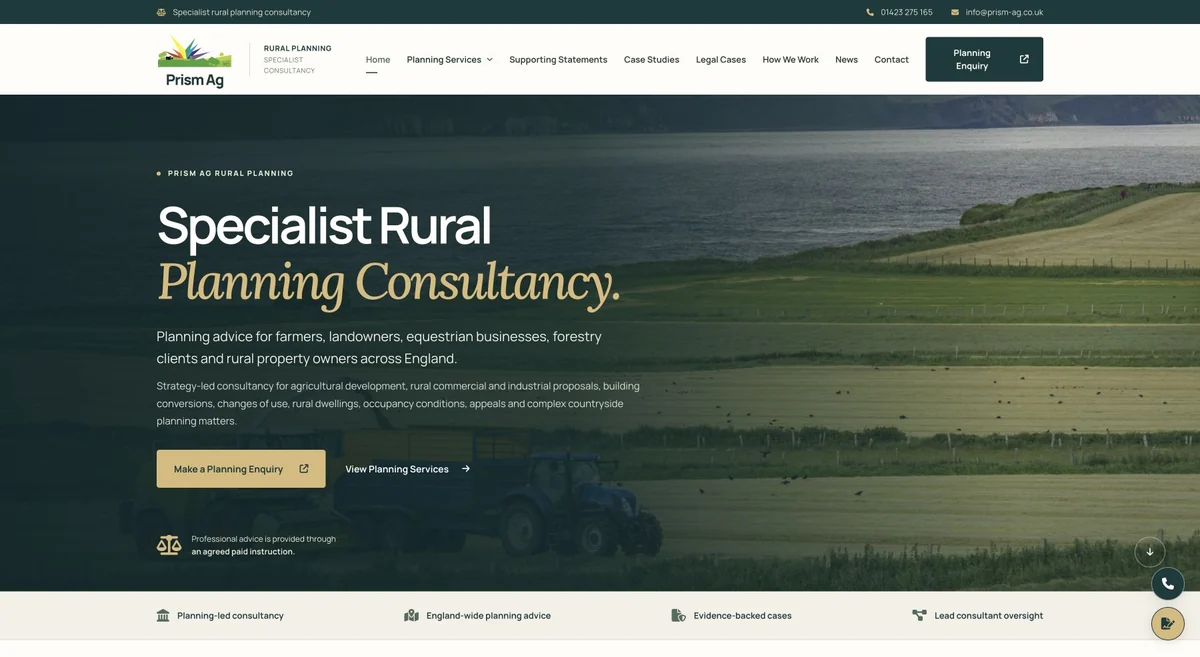
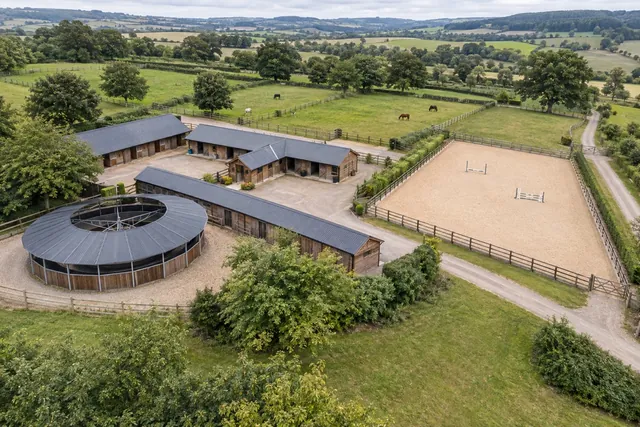
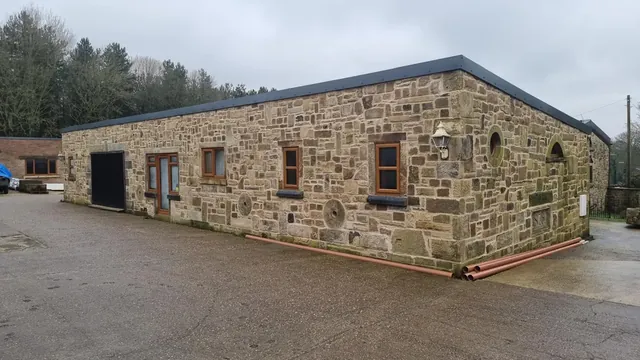
The detail behind the work
I plan the website with the people who know the service. We identify the visitor’s questions, agree the evidence and responsibilities, then turn the approved material into a clear, maintainable structure.
01Define the specialism and the right enquiries
We identify the work you want to attract, the clients you serve and the boundaries of your service. A specialist rural consultancy needs a different explanation from a practice working on a wide mix of commercial developments. The website should make those distinctions easy to understand.
I review the existing material with you and group it around useful visitor decisions. That may include the type of proposal, stage of the process and service required. Each page needs a clear purpose, rather than a long list of near-identical pages for every possible phrase.
02Agree the content and project evidence
We decide which service explanations, biographies and project examples support that structure. You or a nominated adviser approves professional statements, qualifications and any guidance. For project stories, we agree what can be shown, who needs to approve it and which details should remain private.
I can organise that material into readable page layouts and consistent project stories. A useful example explains your involvement and the particular circumstances. Photos, drawings and supporting material are selected for the information they add, with publication permissions checked before they are included.
03Design the first contact and handover
The enquiry form is planned around what your team needs to assess the next step. We can request a short proposal description, broad location and stage of progress, then explain how the consultancy responds. Detailed documents can follow through an agreed process where appropriate.
If your practice offers paid consultations, the website can distinguish those from an initial enquiry. Appointment tools or CRM integrations are considered separately from the basic form, with costs and responsibilities agreed before development. The route should reflect how your consultancy actually accepts work.
04Launch with a maintainable structure
I check the agreed pages, contact routes and mobile layouts, then provide a handover matched to the editing your team will do. An organised WordPress setup can support future service updates and new project examples while keeping the visual presentation consistent.
After launch, lead-generation and content improvements can consider the relevance of enquiries as well as their number. The next useful addition might be a clearer service explanation or a well-chosen project story, guided by the questions your potential clients actually ask.