Give buyers several entry points.
Organise products by the routes customers actually use: product family, application, industry or specification. A buyer who knows the part should not have to follow the same journey as someone investigating a new requirement and comparing possible manufacturing approaches.
Present specifications consistently.
A repeatable product structure can bring descriptions, drawings, dimensions and supporting downloads together. I help decide what belongs on the page and what needs a document, so important information remains usable on mobile as well as a large office screen.
Qualify technical enquiries.
Forms can collect a product reference, quantity, application and relevant initial files where appropriate. We agree the fields with the people who handle enquiries, keeping sensitive technical material and detailed quotation work within the process your business actually uses.
Separate trade rules from display.
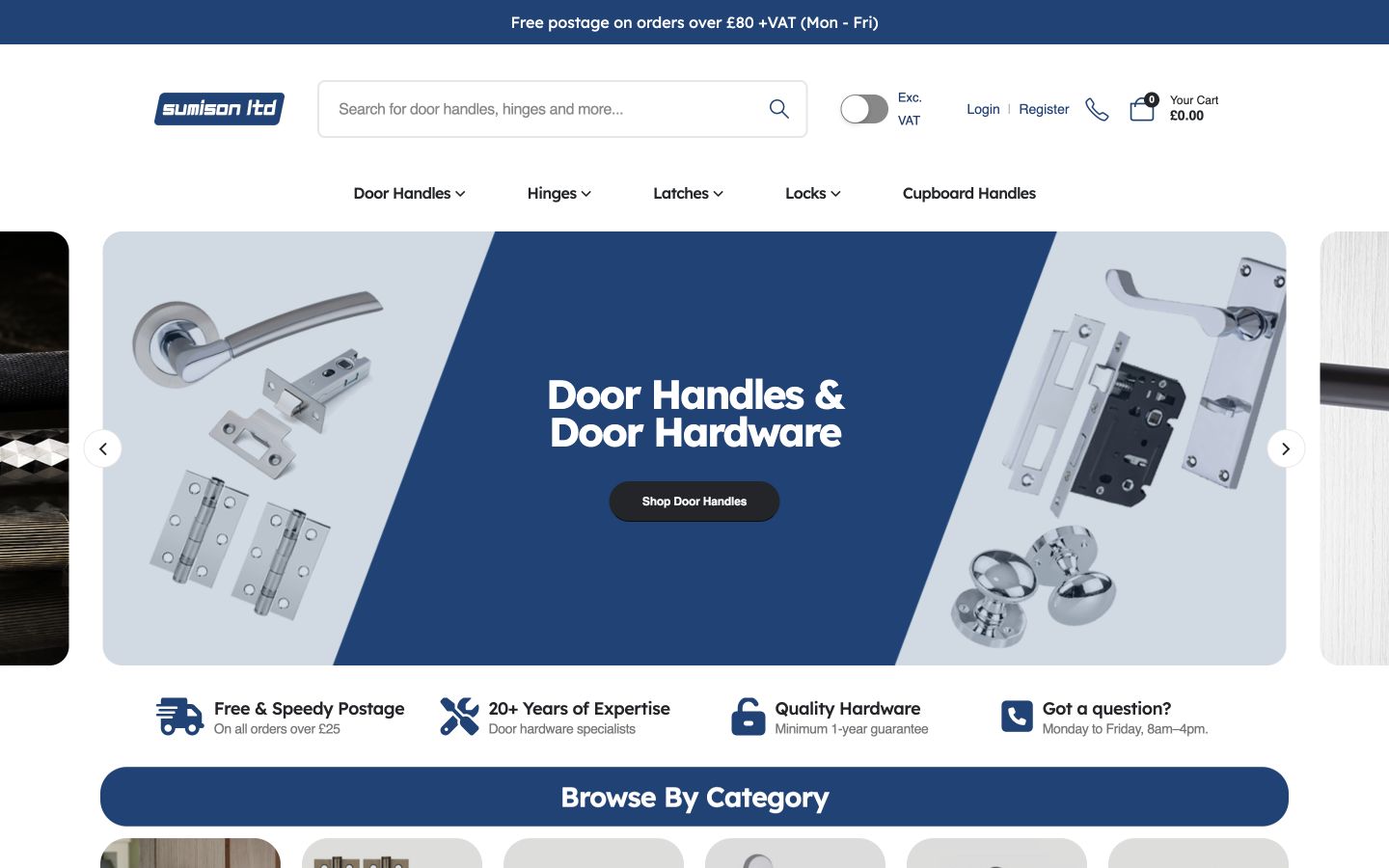
If customers buy online, pricing visibility, discounts, account access and delivery rules need explicit decisions. Sumison is an example of a WooCommerce trade build with custom pricing features. The right rules for your store are scoped around your own commercial model.
Plan system connections early.
Stock, orders, product data and customer records may live in different systems. I can assess development and integration needs before the design fixes a workflow in place, including supported interfaces, the source of each field and responsibility when a connection fails.
Make expertise discoverable.
Useful application pages and clear product explanations can support search visibility and give AI systems more understandable source material. AIO builds on accurate, accessible content, with product terminology and business information organised around the questions your prospective customers ask.