The detail behind the work
We can start with the practical questions your customers and team face. That gives the design a purpose and helps keep technical scope, costs and responsibilities visible.
01Decide what a visitor needs to do
We identify your audiences and their different next steps. A prospective trade account, an existing customer and a first-time retail shopper may need different information. I use that to shape the page structure, navigation and enquiry or checkout routes before moving into visual design.
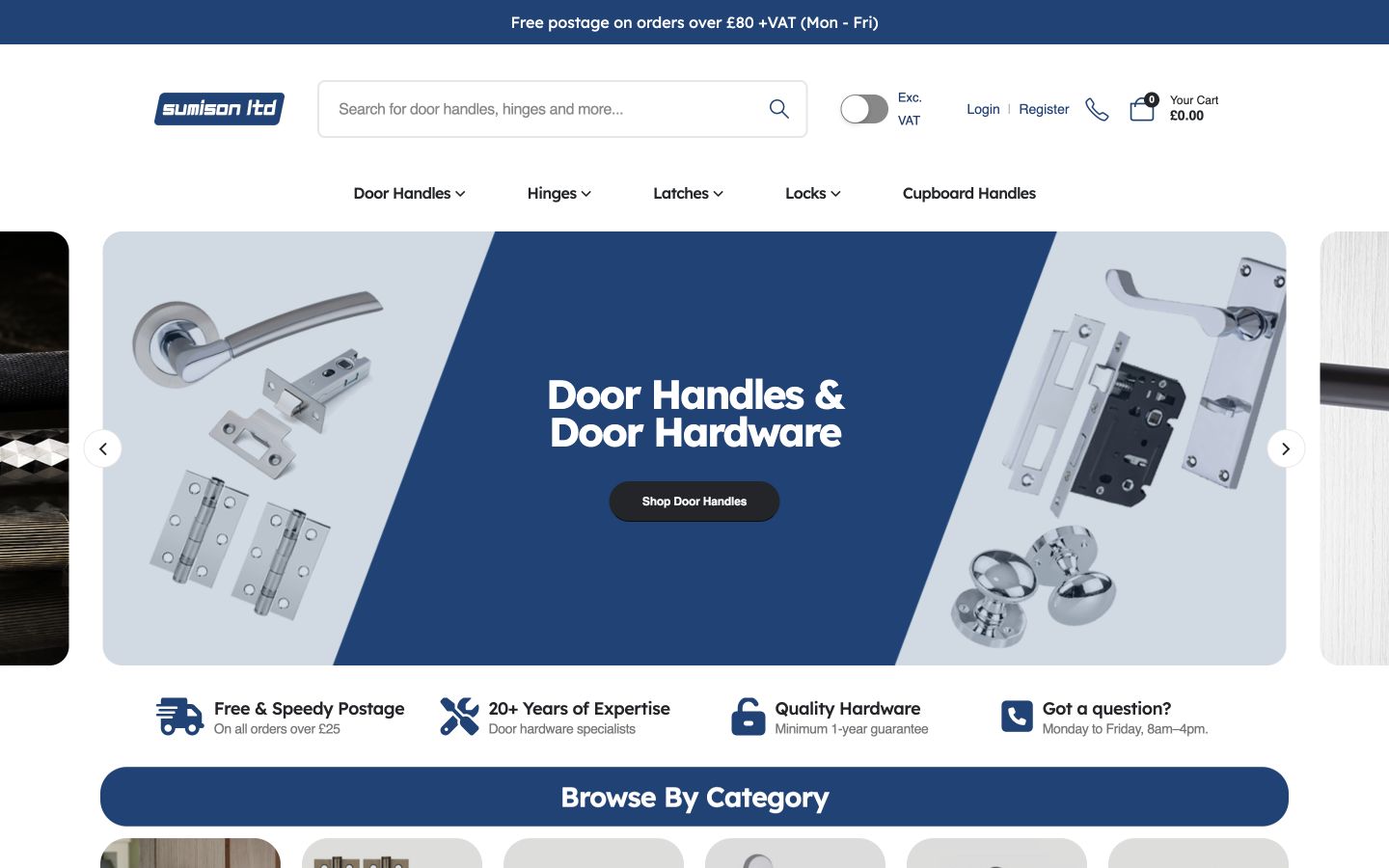
For a focused business website, the priority may simply be clear services and an effective enquiry. Where online selling is essential, my e-commerce service covers the broader build, while the manufacturer and trade supplier page explains the more specialist buyer decisions.
02Agree the information and integrations
Before committing to an integration, we look at the product data, account rules, stock source and order handling. Access to the existing systems matters. I explain what is supported, what needs custom work and where a third-party charge or licence could affect the overall budget.
Content needs the same care. You know your products and customers; I help organise the information into useful pages. If there is an existing website, we review important content and URLs so the redesign includes a considered retention and redirect plan rather than an unexplained change of address.
03Design, build and check the key journeys
The design should make the important choices clear on a phone as well as a desktop. I build around the agreed content and functionality, then check the main journeys using suitable test information. Any checkout, account or API testing needs an appropriate agreed test route.
I also check the page structure, metadata, canonical URLs and crawl directives as part of the release work. These are foundations for search visibility, not a ranking guarantee.
04Choose how the website will be looked after
We agree the launch handover and the work that follows. That may mean your team handles products while I manage technical care, or a broader improvement arrangement. Website maintenance and marketing have different responsibilities, so the proposal should make those distinctions easy to understand.
If a smaller local business prefers a monthly arrangement, the £100 plus VAT monthly service is an ongoing rental with a 12-month minimum and local SEO/AIO included. It is not an instalment plan that transfers ownership after the first year.